.png)


Top 7 Places to Visit in Uttarakhand: A Complete Travel Guide for 2026
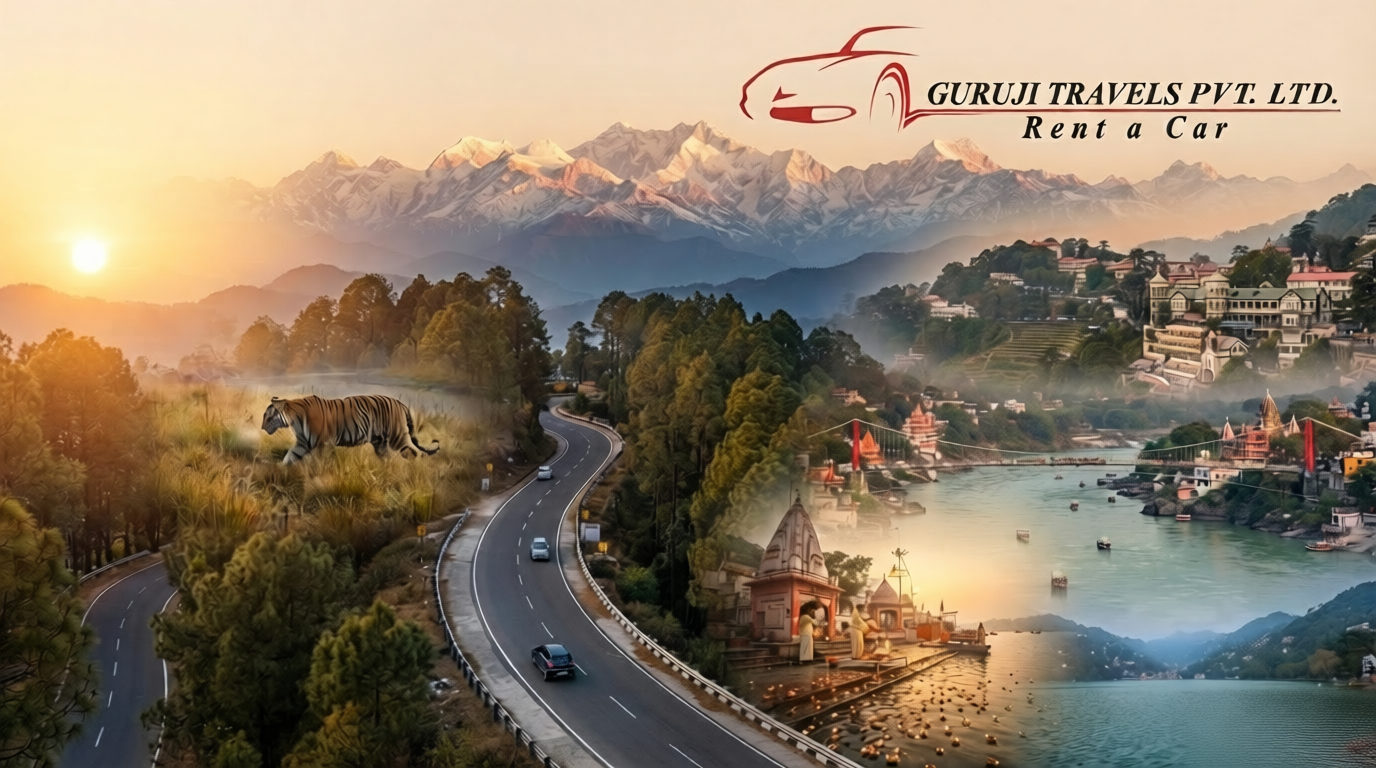
Uttarakhand is one of those rare Indian states where the mountains, the rivers, and the temples all seem to be having a conversation with each other. Locals call it Devbhoomi, the land of the gods, and once you have stood at the bank of the Ganga in the early morning mist or watched the sun rise over a Himalayan ridge, you understand exactly why. Whether you are chasing spiritual peace, an adrenaline rush, a quiet hill station honeymoon, or a jungle safari with your kids, Uttarakhand somehow manages to fit everyone's idea of a perfect trip into one state. If you are planning your 2026 getaway and wondering where to start, here are the seven places that consistently top our travelers' wishlists, along with everything you need to know before you pack your bags.
1. Rishikesh: The Yoga Capital That Also Loves an Adrenaline Rush

Rishikesh has a split personality, and that is exactly what makes it special. On one side of the Ganga, you have ashrams, meditation halls, and the famous Lakshman Jhula and Ram Jhula bridges where the evening Ganga Aarti turns the entire ghat into a sea of flickering diyas. On the other side, the same river becomes a playground for white water rafting, bungee jumping, and cliff jumping that draws thrill seekers from across the country. Beatles Ashram, now a graffiti-covered relic where the band once composed parts of the White Album, has become an unlikely pilgrimage spot for music lovers and photographers. What surprises most first-time visitors is how walkable the town is; you can go from a silent meditation session to a riverside café serving genuinely good coffee within ten minutes. The best months to visit are September to November and February to April, when the weather is pleasant enough for both temple visits and river activities. Since Rishikesh sits roughly 240 kilometers from Delhi, a comfortable road trip is usually the easiest way in, and you can check taxi fares and vehicle options for a Delhi to Rishikesh taxi if you want to skip the hassle of trains or buses.
2. Nainital: The Lake City That Never Really Goes Out of Style

Nainital has been a favorite escape from the plains since the British era, and even after all these years, the charm of Naini Lake surrounded by seven hills has not faded one bit. A boat ride on the lake at dusk, when the Mall Road lights start reflecting on the water, is one of those simple pleasures that photographs never quite capture. Beyond the lake, Naina Devi Temple sits right at the northern edge of the water, and it is worth timing your visit around evening aarti if you want to see the town at its most atmospheric. For a proper view of the snow-capped peaks, Snow View Point is a short cable car ride away, and on a clear winter morning you can spot the Nanda Devi range in the distance. Families tend to gravitate toward Nainital because it balances adventure with comfort; there is enough for children to enjoy at the zoo and the boating club, while adults can spend hours simply strolling the Mall Road markets picking up candles, woolens, and Kumaoni handicrafts. Summers here are genuinely cool compared to Delhi, which is exactly why it gets crowded between April and June, so booking your stay and your Delhi to Nainital taxi in advance during peak season saves you a lot of last-minute stress.
3. Mussoorie: The Queen of Hills Lives Up to Its Name

Mussoorie earned its nickname long before Instagram existed, and it still delivers on the promise. The Mall Road here is arguably the most lively of any hill station in North India, lined with cafés, colonial-era buildings, and viewpoints that open up without warning between the shops. Gun Hill, the second highest point in town, is best visited either at sunrise or sunset, and the ropeway ride up is half the fun. If you are traveling with family, Kempty Falls is a popular stop, though we usually suggest going early in the day before the crowds and the noise pick up. What a lot of visitors do not realize is that Mussoorie also works brilliantly as a base for short treks toward Dhanaulti and Surkanda Devi, both of which are far quieter and greener than the main town. The weather stays pleasant from March right through November, with a genuinely magical winter window in December and January when occasional snowfall turns the entire hillside white. Since it is only about 290 kilometers from Delhi, many travelers pair Mussoorie with a nearby destination on the same trip, and a well-planned Delhi to Mussoorie taxi makes that kind of multi-stop itinerary far easier to manage than relying on shared transport.
4. Haridwar: Where the Ganga First Touches the Plains

Haridwar is often mentioned in the same breath as Rishikesh, but it has its own distinct identity as one of the seven holiest cities in Hinduism. Har Ki Pauri, the main ghat, transforms every evening into a spectacle during the Ganga Aarti, when thousands of oil lamps float down the river to the sound of bells and chanting. It is genuinely one of those experiences that words struggle to describe fully; you simply have to stand there and feel it. Beyond the religious significance, Haridwar is also a practical gateway, since most Char Dham Yatra routes and pilgrimages to Rishikesh, Uttarkashi, and beyond typically begin here. Mansa Devi and Chandi Devi temples, both accessible by cable car, offer sweeping views of the city and the river winding through it. If you are visiting during Kumbh Mela years or the Kanwar Yatra season, expect significant crowds and plan your travel dates accordingly. For a comfortable pilgrimage or family trip, booking a Delhi to Haridwar taxi in advance is especially useful during these peak religious periods when local transport options fill up fast.
5. Haldwani: The Underrated Gateway to Kumaon

Haldwani rarely makes it to the typical "top places in Uttarakhand" list, and honestly, that is a missed opportunity for most travel guides. As the commercial hub of the Kumaon region, it does not have the postcard appeal of a hill station, but it plays a crucial role as the entry point for Nainital, Bhimtal, Kainchi Dham, and several offbeat Kumaoni villages that most tourists never get around to visiting. If you have an extra day, Kainchi Dham, the ashram made famous partly because of its connection to global tech figures who visited seeking spiritual clarity, is a peaceful detour just outside town. Gaula River and the surrounding forest areas near Haldwani also offer a quieter, less commercial version of nature compared to the more touristy hill stations further up. Many long-distance travelers actually prefer stopping in Haldwani because of its proximity to the plains, making it a comfortable midway break before heading further into the hills. A reliable Delhi to Haldwani taxi is particularly handy if your itinerary includes Kumaon's lesser-known corners rather than just the standard hill station circuit.
6. Almora: Culture, Cuisine, and Clean Mountain Air

Almora sits on a horseshoe-shaped ridge and offers something that busier hill stations often lose along the way: a genuine sense of local culture. The old town's narrow lanes, wooden-balconied houses, and small temples give Almora a lived-in charm that feels very different from the more commercialized parts of Nainital or Mussoorie. Bright End Corner, right at the edge of the town, is where locals go for sunrise and sunset views of the Himalayan range, and it rarely feels overcrowded even in peak season. Food lovers should not skip Bal Mithai, a local sweet made from roasted khoya coated in sugar balls, which has practically become synonymous with Almora itself. Kasar Devi Temple, perched on a hill just outside town, has an interesting history of attracting spiritual seekers, writers, and artists from around the world since the mid-20th century, and the walk up there through pine forests is genuinely calming. Almora also works as a gateway to Kausani, Baijnath, and Jageshwar, all of which are worth exploring if you have a few extra days. Given its slightly longer distance from Delhi, a well-organized Delhi to Almora taxi with an experienced driver makes the hill roads considerably more comfortable, especially if you are traveling with elderly family members.
7. Jim Corbett National Park: India's Original Tiger Reserve

Book Jim Corbett National Park Taxi Now
Jim Corbett is where the wild side of Uttarakhand truly comes alive. As India's oldest national park, established way back in 1936, it has had decades to build one of the country's most stable tiger populations, along with elephants, leopards, deer, and over 600 species of birds that make it a genuine paradise for wildlife photographers. The Dhikala zone remains the most sought-after safari area because of its open grasslands and higher tiger sighting probability, though booking there requires planning weeks in advance, especially during the November to June season when the park stays open. Jhirna and Bijrani zones are good alternatives if Dhikala permits are unavailable, and both still offer excellent chances of spotting wildlife without the same booking rush. Beyond the safaris, many resorts around Corbett are built along the Kosi River, and simply sitting by the water listening to the forest sounds in the evening is its own kind of reward. Families traveling with young children often appreciate that Corbett offers a mix of adventure and relaxation, unlike some of the more physically demanding hill treks elsewhere in the state. Since safari slots and resort bookings are time-sensitive, arranging your Delhi to Jim Corbett National Park taxi ahead of time ensures you reach the park gate right on schedule instead of losing your safari slot to a delay.
Planning Your Uttarakhand Trip: Practical Tips That Actually Help
Timing your trip well makes a bigger difference in Uttarakhand than in most other Indian states, simply because the terrain varies so much between regions. Summer, from April to June, is ideal for the higher hill stations like Mussoorie, Nainital, and Almora, while the same months can get uncomfortably hot in Haridwar and Haldwani, which sit closer to the plains. Monsoon, from July to September, brings landslide risks on several hill routes, so it is generally the least recommended season unless you are specifically chasing the lush greenery for photography. Winter, from October to February, works beautifully for Rishikesh, Haridwar, and Jim Corbett, and offers a genuine snow experience in Mussoorie and Almora during December and January.
For most travelers coming from Delhi-NCR, road travel remains the most flexible option because it lets you stop for meals, photo breaks, and detours to smaller villages that trains and flights simply cannot offer. It also removes the stress of matching your itinerary to fixed train or flight schedules, which matters a lot when you are visiting multiple towns on one trip. Carrying a light jacket even in summer is worth the suitcase space, since temperatures drop noticeably once you cross into higher altitudes after sunset.
Choosing the right vehicle also changes how comfortable the trip feels, especially on hill roads with sharp turns and steep climbs. A sedan works fine for flatter routes like Haridwar or Haldwani, but for genuine mountain stretches toward Mussoorie, Almora, or the approach to Jim Corbett, an SUV or a slightly higher ground clearance vehicle handles the terrain far better and keeps motion sickness to a minimum for most passengers. Groups traveling with more than four people, or carrying extra luggage for a longer trip, usually find a Tempo Traveller more practical than trying to squeeze everyone into a smaller car.
Another detail that often gets overlooked is choosing a driver who already knows the hill routes well. Someone unfamiliar with the frequent hairpin bends, fog patches near river valleys, or the local shortcuts around traffic-heavy stretches can easily turn a scenic drive into a stressful one. Experienced local drivers also tend to know which roadside dhabas are actually worth stopping at, which is a small thing that makes a noticeable difference on a long journey. If your itinerary includes an early morning safari at Corbett or a sunrise viewpoint in Almora, discussing the departure time with your driver a day in advance helps avoid any last-minute rush.
Budgeting for a Uttarakhand trip is fairly straightforward once you separate transport, stay, and food into rough categories. Taxi costs typically depend on the distance, the vehicle type, and whether you need the driver to wait and accompany you across multiple towns or simply drop and pick up at fixed points. Hill station accommodation tends to be priced higher during peak season weekends, so booking your stay at least two to three weeks in advance for popular months like May, June, and December can save a meaningful amount compared to last-minute bookings.
Frequently Asked Questions
Which is the best place to visit in Uttarakhand for a first-time traveler?
Rishikesh and Nainital are usually the easiest starting points, since both offer a good mix of sightseeing, food, and activities without requiring long additional travel once you arrive.
How many days do I need to cover these seven places?
Realistically, covering all seven properly needs 10 to 12 days. If you have less time, pairing two or three nearby destinations, such as Haridwar with Rishikesh, or Nainital with Almora, works far better than rushing through everything.
Is Uttarakhand safe for solo female travelers?
Yes, popular tourist towns like Rishikesh, Nainital, and Mussoorie see heavy footfall from solo travelers year-round and are generally considered safe, though the usual precautions around late-night travel and choosing verified accommodations still apply.
What is the best time to visit Jim Corbett for tiger sightings?
The park stays open from mid-November to mid-June, and the drier months of March to May typically offer the best sighting chances since animals move toward water sources more predictably.
Do I need permits for visiting these places?
Only Jim Corbett requires an official safari permit, which is best booked online in advance. The other six destinations on this list do not require any special permits for Indian travelers.
Final Thoughts
Uttarakhand rewards travelers who take their time. It is easy to treat these seven places as a checklist, but the real memories usually come from the unplanned moments in between: a chai stop on a mountain curve, a conversation with a local shopkeeper in Almora, or simply watching the Ganga flow past you in Rishikesh at sunset. Whichever combination of these destinations you choose for your 2026 trip, starting with a comfortable, well-planned journey from Delhi makes everything that follows easier to enjoy. At Guruji Travels, we have spent years helping travelers plan exactly these kinds of trips, and we are always happy to help you work out the right route for yours.